Since its introduction in 1996, USB (Universal Serial Bus) has profoundly transformed the way we connect electronic devices. As the core medium for data transmission and power delivery, USB data cables have undergone nearly three decades of technological iteration - evolving from simple cables with a mere 1.5 Mbps transfer rate to sophisticated cables supporting 40 Gbps high-speed transmission and 240 W high-power charging. Reviewing this technological evolution not only helps us understand the current landscape of the data cable industry but also provides an important reference for grasping future development trends.
I. The USB 1.0/1.1 Era: Laying the Foundation (1996-2000)
In 1996, the USB-IF (USB Implementers Forum) officially released the USB 1.0 specification, which defined two transfer rate tiers: Low Speed at 1.5 Mbps and Full Speed at 12 Mbps. USB data cables from this period featured a 4-pin connector design and were primarily used to connect low-speed peripherals such as mice and keyboards. Although the speeds seem extremely limited by today's standards, the significance of USB 1.0 lay in unifying the previously chaotic landscape of PC peripheral interfaces - before its introduction, users had to deal with multiple incompatible interfaces including PS/2, serial, and parallel ports.
The USB 1.1 revision released in 1998 fixed numerous compatibility issues, driving the adoption of USB interfaces in the PC domain. Data cables from this period had a relatively simple structure, requiring only 4 internal conductors (VBUS, D+, D-, GND). The low manufacturing cost of these cables laid the foundation for subsequent large-scale commercialization.
II. The USB 2.0 Era: The Dawn of High-Speed Transmission (2000-2008)
In April 2000, the USB 2.0 specification was officially released, introducing a 480 Mbps High Speed transfer mode - a 40-fold increase over USB 1.1. This breakthrough enabled USB data cables to handle larger-capacity data transfer tasks, and the demand for connecting external hard drives, digital cameras, printers, and scanners grew rapidly.
USB 2.0 data cables retained the Type-A connector appearance, but the internal conductor quality and shielding requirements were significantly upgraded. To ensure high-speed signal integrity, cables required higher-quality copper conductors and more precise twisted pair structures, along with added aluminum foil shielding and braided shielding layers to suppress electromagnetic interference. During this period, USB data cable manufacturing began to move toward professionalization, and the impact of cable quality differences on transmission performance became increasingly apparent.
III. The USB 3.0/3.1/3.2 Era: The Leap to SuperSpeed (2008-2019)
In November 2008, USB 3.0 was released, delivering 5 Gbps SuperSpeed transmission capability - more than 10 times that of USB 2.0. USB 3.0 data cables added 5 new conductors (two pairs of differential signal lines and one GND) to the existing 4, bringing the total to 9 conductors. In terms of appearance, the internal contacts of USB 3.0 Type-A connectors were blue to distinguish them from USB 2.0.
Subsequently, the USB-IF updated the specification multiple times. USB 3.1 released in 2013 increased the speed to 10 Gbps (SuperSpeed+); USB 3.2 introduced in 2017 further incorporated dual-channel transmission technology, reaching a maximum speed of 20 Gbps. During this phase, the manufacturing difficulty of data cables rose sharply: high-frequency signals imposed extremely stringent requirements on impedance matching, and factors such as cable length, bend radius, and shielding quality directly affected signal quality.
Key Data: From USB 2.0 to USB 3.2 Gen 2x2, the transfer rate increased more than 40-fold in less than 20 years, posing comprehensive challenges to the conductor materials, insulation dielectric constants, shielding structures, and connector precision manufacturing of data cables.
IV. The USB-C and USB4 Era: Unification and Integration (2014-Present)
In August 2014, the USB Type-C connector specification was released, bringing revolutionary changes. The Type-C connector is compact, supports reversible insertion, and can carry up to 5A of current and 20V of voltage (i.e., 100W of power; the subsequent PD 3.1 specification further raised the limit to 240W/48V). It quickly became the mainstream connector in the consumer electronics field.
The USB4 specification released in 2019 further integrated Intel's Thunderbolt 3 technology, achieving a maximum transfer rate of 40 Gbps and supporting advanced features such as dynamic bandwidth allocation and protocol multiplexing. USB4 data cables are structurally far more complex than their predecessors: high-end cables integrate more than 20 internal conductors, including high-speed differential pairs, SBU auxiliary channels, CC configuration channels, VBUS power lines, and multiple GND return lines. Some active USB4 cables even incorporate retimer (Redriver/Retimer) chips to compensate for high-frequency signal loss within the cable.
V. The Impact of Technological Evolution on the Data Cable Manufacturing Industry
The continuous upgrading of USB standards has profoundly reshaped the technical barriers and competitive landscape of the data cable manufacturing industry. This is primarily reflected in the following aspects:
Technical Dimension | USB 2.0 Era | USB 3.x Era | USB4 Era |
Core Count | 4 | 9 | 20+ |
Shielding | Single foil | Foil + braid | Multi-layer independent |
Chip Integration | None | Optional E-Marker | E-Marker + Retimer |
Max Charging Power | 2.5W | 100W | 240W |
First, the material and process requirements for cables continue to climb. High-speed transmission requires low-loss dielectric materials and high-purity copper conductors; high-power charging requires thicker power conductors and better thermal designs. Second, the popularization of Type-C connectors has driven the standardization of data cables and the development of certification systems, with USB-IF certification becoming a market passport for high-quality data cables. Finally, the rise of active cables has transformed data cables from simple "wires" into "smart cables" integrated with semiconductor devices, placing higher demands on the R&D capabilities and supply chain integration abilities of manufacturing enterprises.
Conclusion
From USB 1.0 to USB4, the evolution of data cables is a technological chronicle of continuously increasing transfer rates, ever-growing power delivery capabilities, and progressively simplified connector forms. Each standard upgrade has brought new challenges and opportunities to the data cable manufacturing industry. Looking ahead, with USB4 Version 2.0 pushing speeds to 80 Gbps and optical USB data cables gradually maturing, this industry will maintain vigorous technological vitality. For data cable manufacturing enterprises, continuously tracking USB standard evolution and proactively investing in new materials and processes are the keys to maintaining competitiveness in this field.


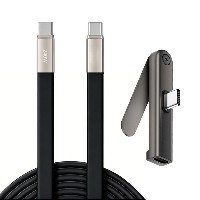 2026 New 240W Type-C Cable USB C Adapter with PD Fast Charging Pure Copper Conductor Silicone Jacket
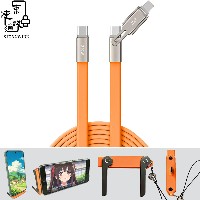 2026 New Stand Data Cable 240W Type C to Type C Cable with Travel Holder Adapter for Xiaomi Huawei L
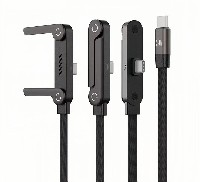 2026 NEW 240W Fast Charging Cable with Phone Stand Nylon Braided Cable USB C Type C Data Cable PD3.1
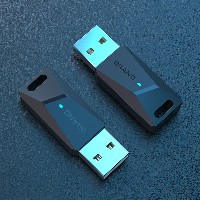 ST-BTR002 Forming Bluetooth receiver Stable and non lagging in car Bluetooth audio cable
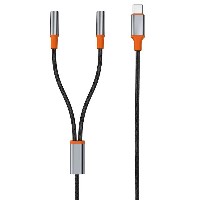 ST-YP-31 L1 type L-dual 3.5mm audio TYPE-C audio head to 3.5mm charging+3.5mm audio socket
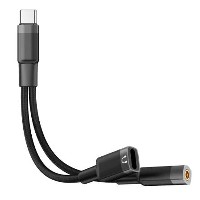 ST-YP-103 Type-C Audio & Charging 2-in-1 Cable (Braided Short Version)
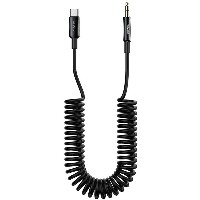 ST-YP-101 Type-C to 3.5mm High-Elasticity Audio Cable (Zinc Alloy Spring Cable Edition)
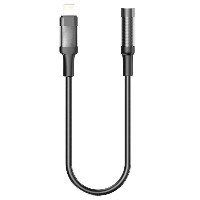 ST-YP-102 Lightning to Bluetooth Audio Transmitter (Braided Transparent Short Version)