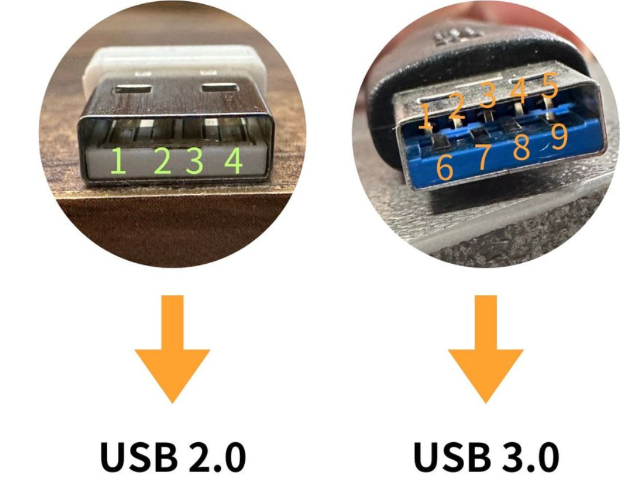
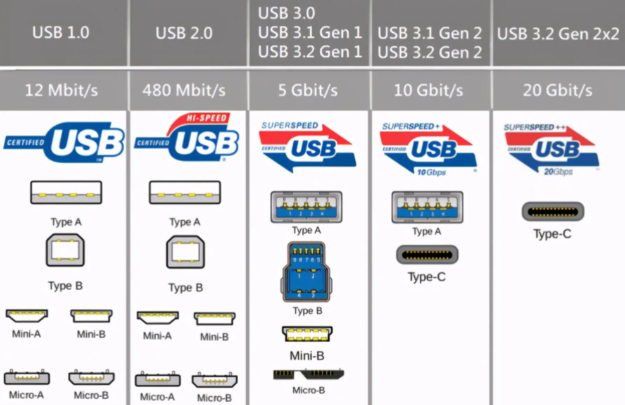
When buying a data cable, most people only look at the connector, the thickness, and the price. Few care about the shielding inside the cable. But for USB 3.0 and higher high-speed data cables, shielding is precisely one of the key factors determining transmission quality. Today we'll talk about the tricks of shielding fraud.
Why Is Shielding Needed?
USB 3.0 transfers at up to 5Gbps (USB 3.2 Gen 2 reaches 10Gbps), and high-frequency signals are extremely sensitive to electromagnetic interference. Phones, chargers, power cords, and even another data cable can all be sources of interference. Without good shielding, high-speed transmission suffers from errors, packet loss, and sudden speed drops.
Proper USB 3.0 cables use a "double shielding" structure:
Foil shielding: Aluminum foil tightly wrapped around each signal pair, shielding against crosstalk between pairs.
Braided shielding: A metal braided mesh (usually tinned copper braid) surrounding the entire cable core, shielding against external electromagnetic interference. Coverage is generally required to be 85% or higher.
What Are the Counterfeit Tactics?
Tactic 1: Omitting the braid layerThe most common fraud method. Only the foil shield is kept, and the metal braid is removed. Costs drop by over 30%, but shielding effectiveness plummets - even mild interference causes speed drops.
Tactic 2: Inflated braid coverage claimsSome cables have a braid layer, but it's sparsely woven with only about 50% coverage - far below the standard 85% requirement. It looks like there's braiding, but the actual shielding effect is poor.
Tactic 3: Partial foil coverageThe aluminum foil only wraps part of the signal wires, or the overlap at seams is insufficient. Costs are saved, but high-frequency signals leak or suffer interference through the gaps.
Tactic 4: CCA braidingThe braid should be pure copper, but counterfeiters use copper-clad aluminum wire instead. It looks similar, but conductivity and shielding effectiveness are much worse.
How Can Consumers Tell?
Shielding is internal - you can't see it without cutting the cable open. But there are several indirect ways to judge:
1. Check cable diameter: A USB 3.0 cable with full double shielding is generally 4-5mm or thicker. A noticeably thinner cable (under 3mm) most likely has its shielding layers removed.
2. Feel the texture: Cables with braided shielding have a certain firmness and a subtle "crinkly" metal feel when bent. Cables that are too soft probably lack a braid layer.
3. Test the speed: Run a large file transfer test and observe whether the speed is stable. If the speed fluctuates wildly - fast one moment, slow the next - it's likely signal instability caused by inadequate shielding.
Conclusion
Shielding is "invisible quality." Counterfeiters exploit the fact that consumers can't see the internal structure to cut corners on shielding. When buying high-speed data cables, don't just look at connector color and claimed specs - pay attention to the cable's real-world performance. You get what you pay for, and this is especially true when it comes to shielding.
StongWire Technology
Quickly connect everything and send it worldwide
Website: https://www.stongwire.com
Alibaba: https://stongwire.en.alibaba.com
WhatsApp: +86 15976150776
E-Mail: lanzhou@stongwire.com


 2026 New 240W Type-C Cable USB C Adapter with PD Fast Charging Pure Copper Conductor Silicone Jacket
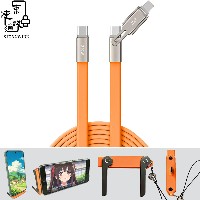 2026 New Stand Data Cable 240W Type C to Type C Cable with Travel Holder Adapter for Xiaomi Huawei L
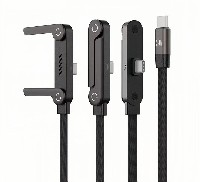 2026 NEW 240W Fast Charging Cable with Phone Stand Nylon Braided Cable USB C Type C Data Cable PD3.1
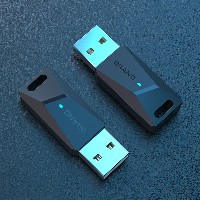 ST-BTR002 Forming Bluetooth receiver Stable and non lagging in car Bluetooth audio cable
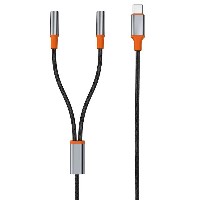 ST-YP-31 L1 type L-dual 3.5mm audio TYPE-C audio head to 3.5mm charging+3.5mm audio socket
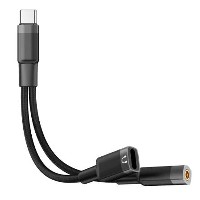 ST-YP-103 Type-C Audio & Charging 2-in-1 Cable (Braided Short Version)
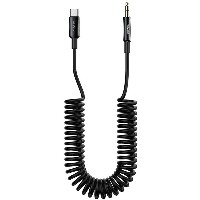 ST-YP-101 Type-C to 3.5mm High-Elasticity Audio Cable (Zinc Alloy Spring Cable Edition)
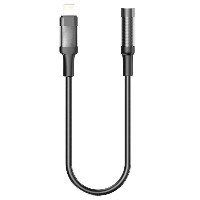 ST-YP-102 Lightning to Bluetooth Audio Transmitter (Braided Transparent Short Version)