Since 2024, the EU regulation on a common charging interface has officially taken effect, requiring all portable electronic devices sold in the European Union to come equipped with a USB Type-C port as standard. This policy milestone signals that USB-C has become the de facto unified standard in the global consumer electronics industry. For data cable manufacturers, this represents an unprecedented market opportunity, while also bringing multiple challenges in technology upgrading, compliance certification, and industry competition. This article provides an in-depth analysis of the changing landscape of the data cable industry in the USB-C era from four dimensions: industry trends, technical challenges, market opportunities, and future outlook.
I. Industry Megatrend: The Forces Driving Universal USB-C Adoption
The adoption of USB-C is driven by three forces working together. The first is policy: beyond the EU, markets such as India and Brazil have successively introduced similar unified-interface regulations, and the world's major consumer markets are converging on mandatory USB-C requirements. The second is ecosystem: leading device manufacturers including Apple, Samsung, Huawei, and Xiaomi have fully transitioned to the USB-C ecosystem; across smartphones, tablets, laptops, monitors, and even VR devices, USB-C is becoming a cross-category universal connectivity standard. The third is technology: the USB-C interface combines data transfer, video output, and power delivery in one connector, while its compact physical form and reversible design deliver an unmatched user experience.
Market Data: According to industry research forecasts, the global USB-C data cable market will exceed USD 25 billion by 2027, maintaining a compound annual growth rate above 15%. Smartphones and laptops remain the largest application segments, while penetration in IoT devices, automotive terminals, and industrial equipment is climbing rapidly.
II. Technical Challenges: Manufacturing Barriers at High Speed and High Power
Challenge 1: High-Frequency Signal Integrity Control The USB4 specification requires a 40 Gbps transfer rate (USB4 Version 2.0 reaches 80 Gbps), corresponding to a Nyquist frequency as high as 20 GHz. At such frequencies, every physical parameter of the cable - conductor diameter, insulation thickness, dielectric constant, twist pitch, and shielding coverage - significantly affects signal quality. Manufacturers need high-frequency simulation analysis capabilities and precision extrusion process control to produce qualified high-speed cables.
Challenge 2: Safety and Thermal Management for High-Power Charging The USB PD 3.1 specification raises the charging power ceiling to 240W (48V/5A), imposing extremely high demands on current-carrying capacity and thermal management. Cables must use thicker power conductors (typically AWG 20 or larger) while accounting for temperature-rise control during prolonged high-current operation. Correct configuration of E-Marker chips and the design of safety protection mechanisms are also critical to ensuring safe high-power charging.
Challenge 3: Certification and Compliance Costs USB-IF certification is an essential threshold for USB-C data cables entering mainstream markets. The complete certification process covers electrical performance testing, mechanical reliability testing, and protocol compliance testing, and certification costs for a single product can reach tens of thousands of RMB. For manufacturers with broad product lines, this is a significant ongoing investment. In addition, different target markets impose their own safety certification requirements (such as CE, FCC, CCC, and PSE), further increasing compliance costs.
III. Market Opportunities: New Application Scenarios Driving Incremental Demand
Although technical barriers keep rising, the universal adoption of USB-C also opens several incremental markets for data cable manufacturers:
1. The automotive USB-C market is expanding rapidly. New energy vehicles are commonly equipped with multiple USB-C charging ports, and the in-vehicle environment imposes special requirements such as high-temperature resistance, vibration resistance, and flame retardancy, creating a specialized cable segment distinct from consumer-grade products.
2. Demand for high-end active cables is growing. Long USB4 high-speed cables (over 1 meter) generally require built-in Retimer chips to compensate for signal loss. The ASP (average selling price) of active cables is far higher than that of ordinary passive cables, offering high margins for technically capable companies.
3. Industrial/medical-grade data cables. Industrial automation and medical equipment impose stricter requirements on the reliability, durability, and anti-interference capability of USB-C cables. This segment has high entry barriers, relatively limited competition, and significant product premiums.
4. Optical USB data cables are emerging. Hybrid opto-electrical USB-C cables - using optical fiber as the high-speed transmission medium and copper for power delivery - can achieve longer-distance high-speed transmission while retaining a slim, lightweight form factor, with promising prospects in data centers, professional audio/video, and similar scenarios.
IV. Competitive Landscape: From Price Competition to Technology Competition
In the USB-C era, the competitive logic of the data cable industry is undergoing a fundamental shift. In the USB 2.0 era, technical barriers were low and competition was dominated by price wars involving large numbers of low-end assembly factories. In the USB4 era, high-speed cable manufacturing involves multiple core technologies such as precision wire processing, high-frequency PCB design, and chip firmware development, dramatically raising industry barriers.
This shift is intensifying industry polarization: companies with R&D capabilities and certification qualifications can enter the high-end market and capture higher margins, while those with only basic assembly capabilities face continuously compressed profit margins. Going forward, companies able to provide one-stop solutions spanning cable design, chip selection, certification testing, and large-scale manufacturing will hold an advantageous competitive position.
V. Future Outlook: Three Trends to Watch
Trend 1: USB4 Version 2.0 ushers in the 80 Gbps era. Released in late 2022, the USB4 Version 2.0 specification doubles the transfer rate to 80 Gbps, and related controller chips and cable products have entered mass-production preparation. This will further widen the technology gap between active cables and ordinary cables, accelerating industry consolidation.
Trend 2: PD 3.1 EPR extends the power range. The Extended Power Range (EPR) mode raises USB-C charging power from 100W to 240W, covering the power needs of the vast majority of thin-and-light laptops and even some mobile workstations. EPR-capable cables require stricter cable specifications and safety protection designs and will become a key product line in the high-end market.
Trend 3: Stricter sustainable manufacturing and environmental regulations. Worldwide, environmental regulations for electronic products are tightening. The EU RoHS Directive, REACH regulation, and the forthcoming Batteries and Waste Batteries Regulation all set clear requirements for material selection, hazardous substance control, and recyclability of data cables. Adopting eco-friendly PVC alternatives, halogen-free flame-retardant solutions, and recyclable packaging will become an unavoidable priority for data cable manufacturers.
Conclusion
The era of the unified USB-C interface brings the data cable industry enormous market expansion opportunities, while simultaneously pushing competition into a new stage centered on technical strength. For data cable manufacturers, increasing R&D investment, strengthening certification systems, building high-end product lines, and prioritizing environmental compliance are essential paths to seizing opportunities and winning the market amid this transformation. We believe that with the continued penetration of new technologies such as USB4 and PD 3.1, and the expansion of new application scenarios including optical cables and industrial-grade cables, the data cable industry will enter a new stage of technology-driven, value-enhancing, high-quality development.
Strongwire is a professional OEM & ODM factory for data cables.
We are committed to providing long-term value to our partners.
We have zero tolerance for counterfeiting, shoddy workmanship, and passing inferior products off as good ones. We resist short-sighted speculation and uphold the principle of truthfulness and reality.
https://www.stongwire.com/
Alibaba: https://stongwire.en.alibaba.com/?spm=a2700.micro_cgs_home.0.0.7b673e5fYAppaW
WhatsApp: +86 15976150776
E-Mail: lanzhou@stongwire.com


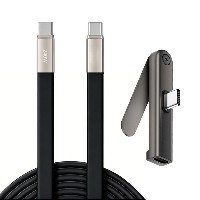 2026 New 240W Type-C Cable USB C Adapter with PD Fast Charging Pure Copper Conductor Silicone Jacket
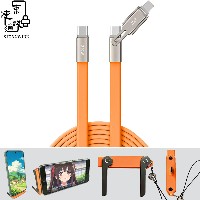 2026 New Stand Data Cable 240W Type C to Type C Cable with Travel Holder Adapter for Xiaomi Huawei L
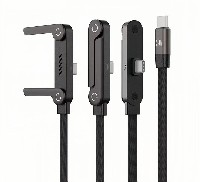 2026 NEW 240W Fast Charging Cable with Phone Stand Nylon Braided Cable USB C Type C Data Cable PD3.1
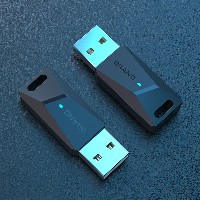 ST-BTR002 Forming Bluetooth receiver Stable and non lagging in car Bluetooth audio cable
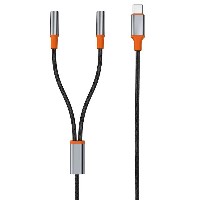 ST-YP-31 L1 type L-dual 3.5mm audio TYPE-C audio head to 3.5mm charging+3.5mm audio socket
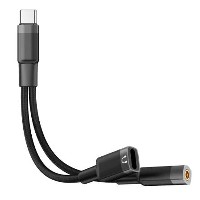 ST-YP-103 Type-C Audio & Charging 2-in-1 Cable (Braided Short Version)
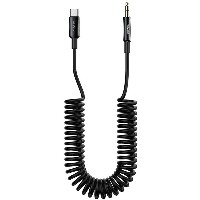 ST-YP-101 Type-C to 3.5mm High-Elasticity Audio Cable (Zinc Alloy Spring Cable Edition)
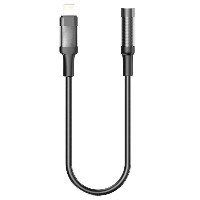 ST-YP-102 Lightning to Bluetooth Audio Transmitter (Braided Transparent Short Version)