Bought a data cable labeled "USB 3.0" only to find the transfer speed is no different from USB 2.0? Chances are you've encountered the "paint it blue, keep the core the same" counterfeit trick. Many consumers assume a blue connector means USB 3.0, but that's just surface-level deception. Today, we'll teach you the first trick: count the pins and spot fakes instantly.
Why "Blue" Can't Be Trusted
The USB 3.0 standard does specify blue internal contacts to distinguish from USB 2.0's black or white. But for counterfeiters, dyeing plastic blue costs next to nothing. They simply brush a layer of blue paint on the USB 2.0 connector and slap a "USB 3.0" label on the package. Consumers who judge by color alone easily fall for it.
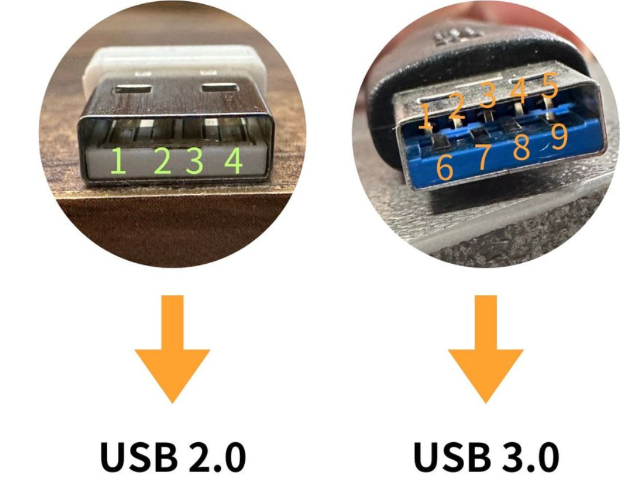
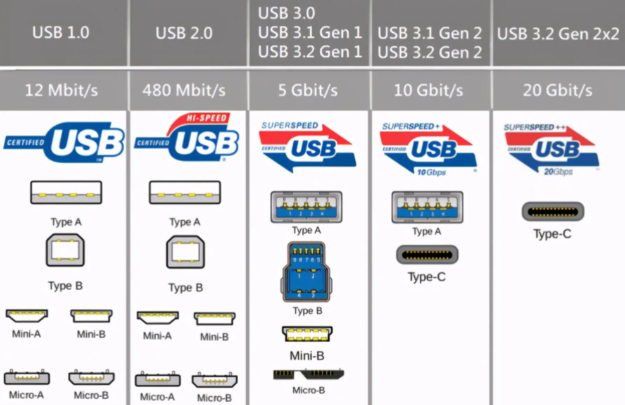
Core Truth: Color can be faked, but pin count cannot. A USB 3.0 Type-A connector has 9 contact pins; USB 2.0 has only 4.
How to Count the Pins
The method is very simple - no tools needed, just your eyes:
Step 1: Pick up the Type-A male plug (the end that goes into your computer) and hold it up to a light source.
Step 2: Look at the metal contacts inside. USB 3.0 has two rows: 5 smaller contacts in the front row + 4 larger contacts in the back row, totaling 9.
Step 3: If you see only one row of 4 contacts, it's a USB 2.0 fake - no matter how blue the shell or how fancy the packaging.
Note: Some fake cables have a 9-pin mold on the outside but only 4 pins connected internally. In this case, the connector visually has 9 pins, but the cable doesn't wire them all. To fully verify, you'll need to test actual transfer speeds (covered in a later article). However, if a cable doesn't even bother with 9 visible contacts, it's definitely fake.
What About Type-C Connectors?
Type-C is trickier. USB 2.0, USB 3.2, and USB4 Type-C cables look almost identical - all symmetric ovals. Counting pins isn't practical since Type-C contacts are dense and tiny. For Type-C cables, try these alternative checks:
1. Check if the package clearly states the USB version and speed (e.g., USB 3.2 Gen 2 / 10Gbps).
2. Look for USB-IF certification and a TID number.
3. Actually test the transfer speed - it's the most reliable method.
Conclusion
Counting pins is your first line of defense against fake USB 3.0 cables. Zero cost, zero tools, and it takes one second. Remember: blue is just the standard's "hint color," not a guarantee. Nine contact pins are the minimum threshold for USB 3.0. Any cable that fails this test can be passed on immediately.
StongWire Technology
Quickly connect everything and send it worldwide
Website: https://www.stongwire.com
Alibaba: https://stongwire.en.alibaba.com
WhatsApp: +86 15976150776
E-Mail: lanzhou@stongwire.com


 2026 New 240W Type-C Cable USB C Adapter with PD Fast Charging Pure Copper Conductor Silicone Jacket
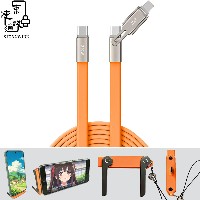 2026 New Stand Data Cable 240W Type C to Type C Cable with Travel Holder Adapter for Xiaomi Huawei L
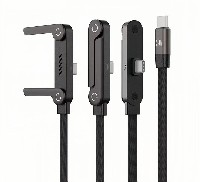 2026 NEW 240W Fast Charging Cable with Phone Stand Nylon Braided Cable USB C Type C Data Cable PD3.1
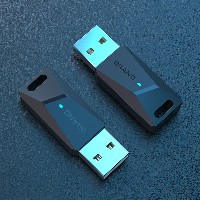 ST-BTR002 Forming Bluetooth receiver Stable and non lagging in car Bluetooth audio cable
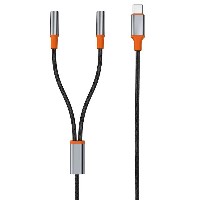 ST-YP-31 L1 type L-dual 3.5mm audio TYPE-C audio head to 3.5mm charging+3.5mm audio socket
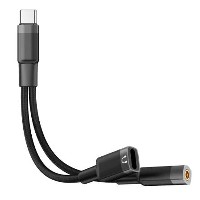 ST-YP-103 Type-C Audio & Charging 2-in-1 Cable (Braided Short Version)
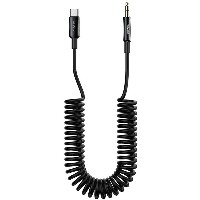 ST-YP-101 Type-C to 3.5mm High-Elasticity Audio Cable (Zinc Alloy Spring Cable Edition)
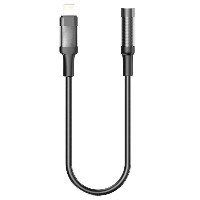 ST-YP-102 Lightning to Bluetooth Audio Transmitter (Braided Transparent Short Version)